Inventory Overview

The default view of the inventory page will show you all of your active inventory. Across the top, you will see your number of active SKUs, products below threshold, and products out of stock. Using the Filters panel at the top of the page, you can narrow down your search results by status and stock, product family, type, brand, strain, supplier, price, and more. Click Search to apply your filters.
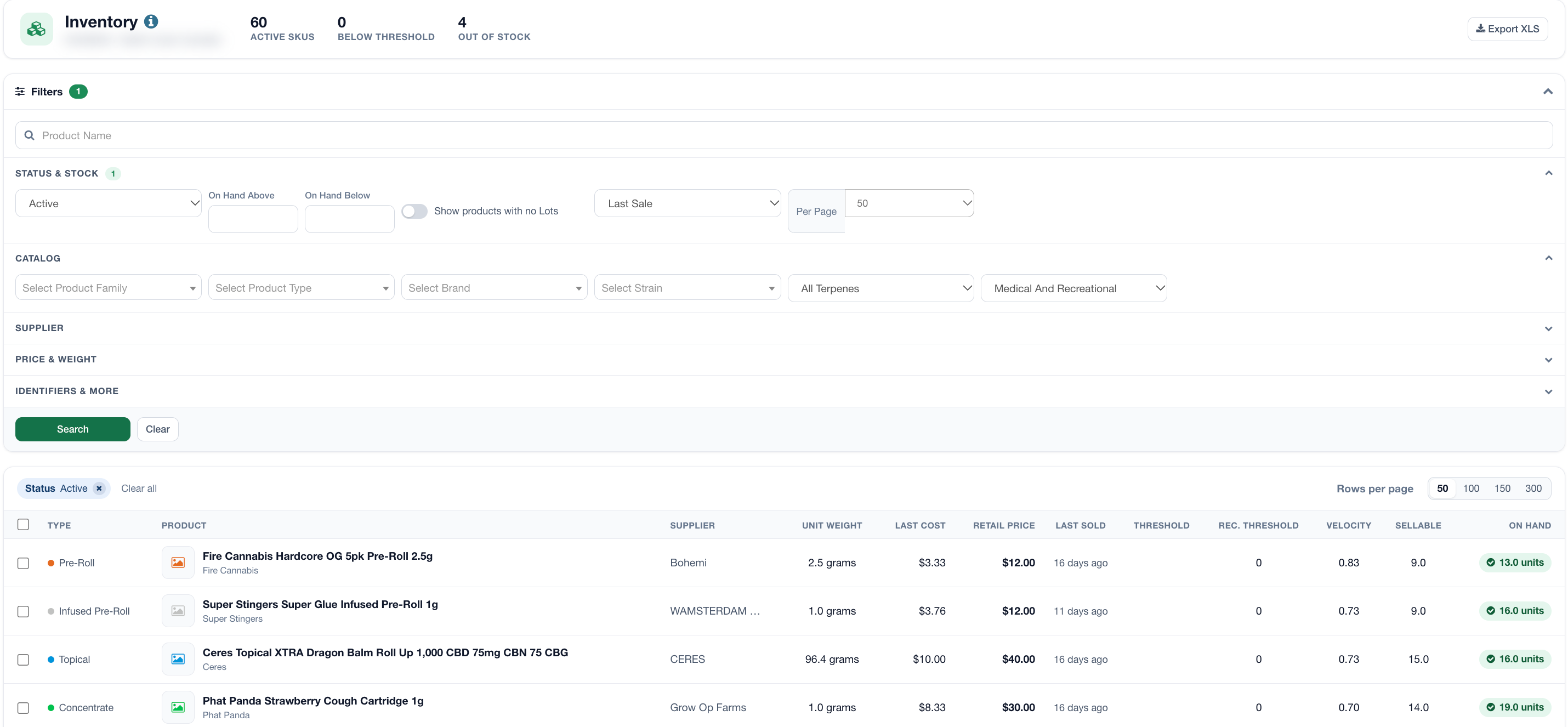
Once you've found the product you are looking for, click on the product name to open a quick view of the selected product. From the quick view, you can make quick edits and click Save. If you want to see more details on the selected product, click the More Details button at the bottom left of the pop-up.
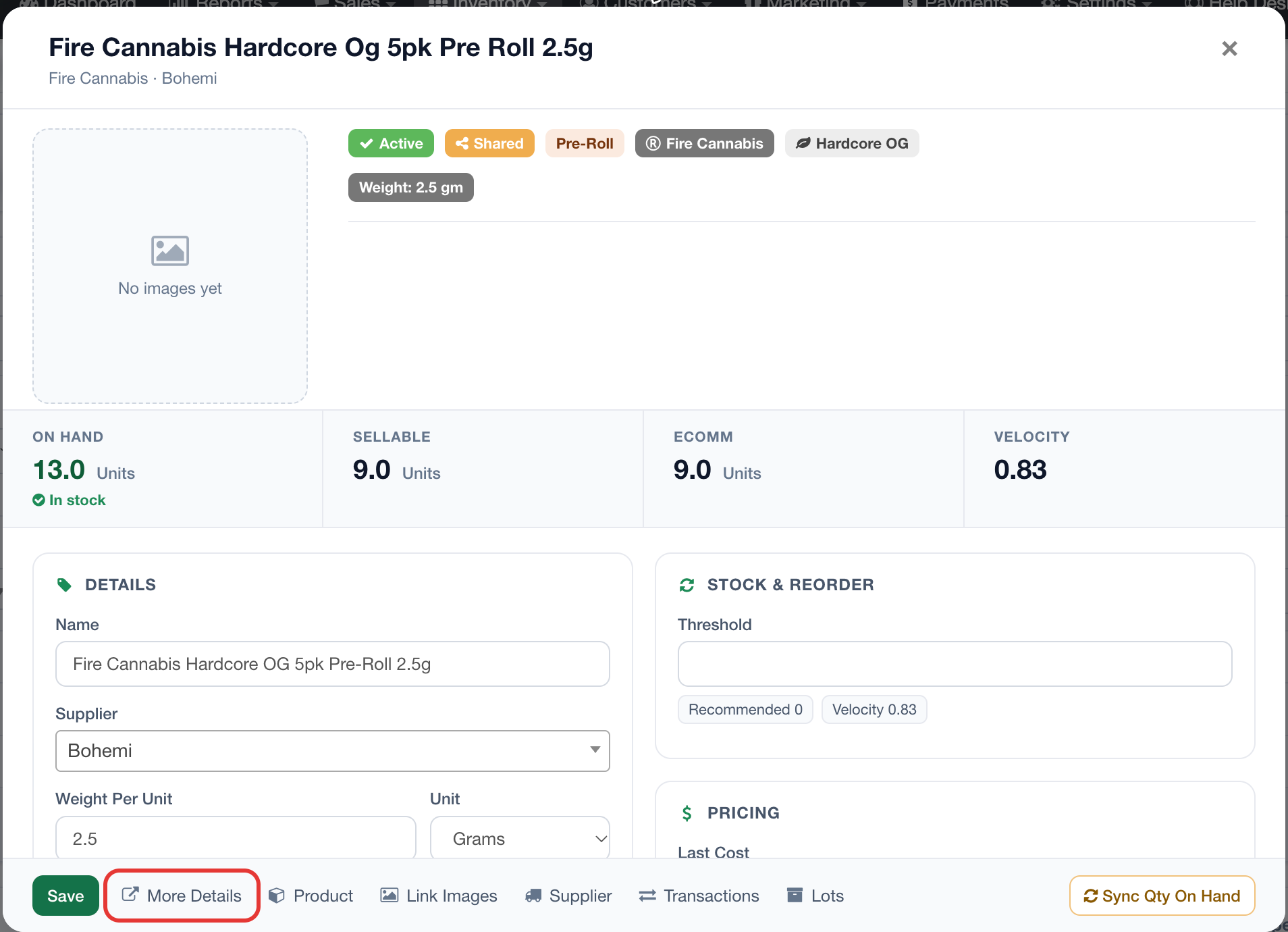
Here is the rundown of each section on the inventory details:
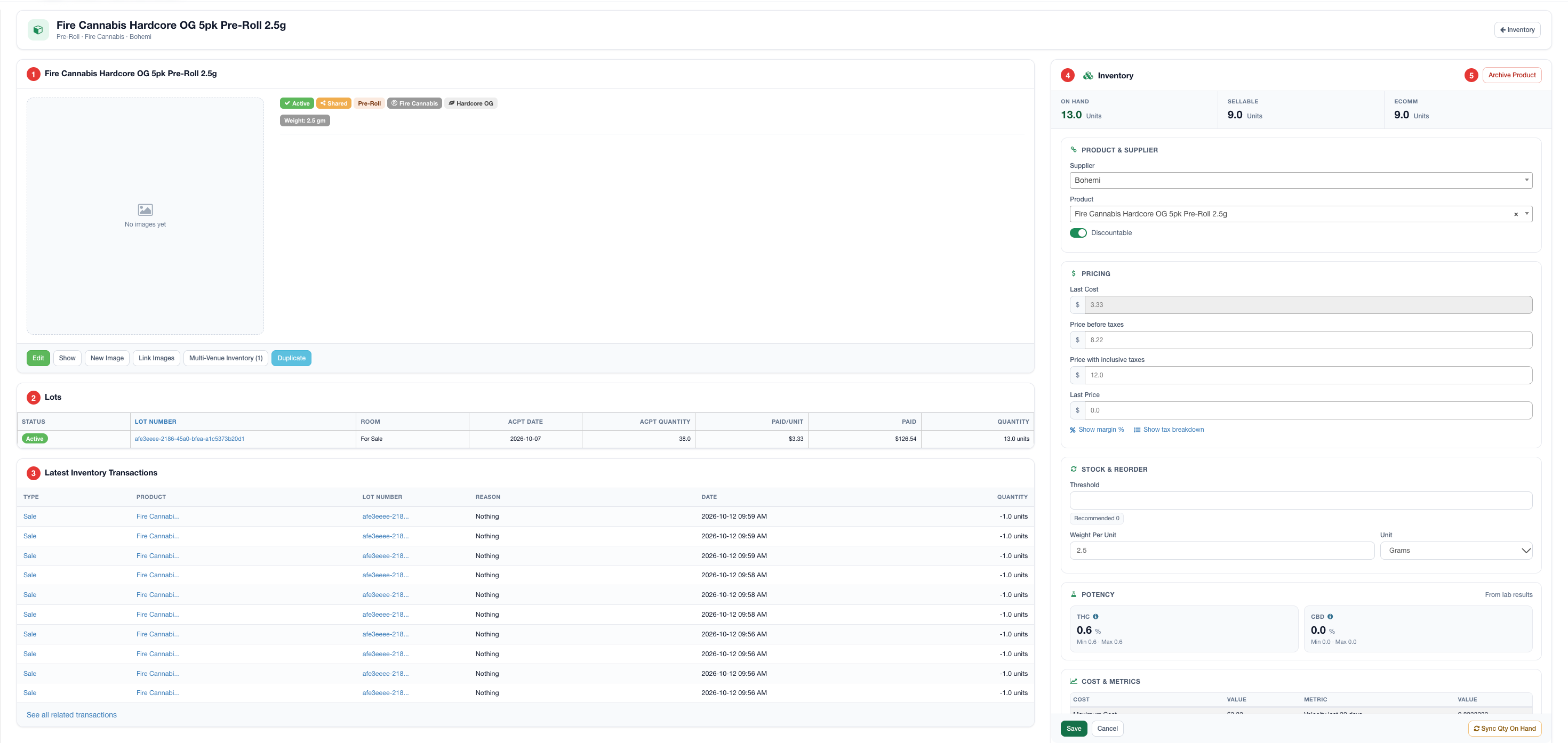
1. Product Information: This is where you can reference information about the product such as type, brand, strain, and weight. Click the green Edit button to edit any of the product content, including image! If you do not have an image uploaded for the product, then the default product type image will be displayed.
2. Lots: Under the lots section, every lot/package that you have ever carried for that product will be displayed. Additional information displayed includes: the current status of the lot/package, lot number, room it is located in, accepted date and quantity, amount paid for the lot/package, and the current quantity you have on hand.
3. Latest Inventory Transactions: This is a list view of every single inventory action that has occurred for that product. An inventory transaction is anything from a sale, a refund, an adjustment, etc. If you would like to see the full history of inventory transactions, click on the 'See all related transactions' link at the bottom of the table.
4. Inventory: There are various sections on the right side of the page to help you manage your inventory:
- On Hand Quantities: At the very top of the inventory section, you will find your 'On Hand', 'Sellable', and 'Ecomm' quantities. The on-hand quantity is the total number of units you have on hand of that product. The sellable quantity is how many units you actually have on hand that you can sell. These values may differ if you have some items in your inventory that have been returned and cannot be resold.
- Product & Supplier: Set the supplier and linked product. The Discountable toggle controls whether the product can be discounted on the POS.
- Pricing: This section is where you will also set your pricing. Depending on if you are using tiered pricing or price/unit the pricing view may vary.
- Price/Taxes: To help you determine how you'd like to price each product, the Last Cost (The last cost you purchased this product for), the Price before taxes, the Price with inclusive taxes, and the Last Price your store sold this product for are all displayed. If you enter a price in one of the pricing fields, then the others will dynamically change. Clicking on the 'Show margin %' and 'Show tax breakdown' will show additional fields, that you can also type in. If you are trying to hit a 50% margin, for example, then you could type '50' into the 'Margin %' field, and all of the 'price before tax' and 'price with inclusive taxes' fields will update to show you what the price needs to be set at, to drive a 50% margin.
- How to adjust the Last Cost: Go to the most recent package/lot, update the "Paid/Unit" field, and save. The last cost will not update if the price field remains the same.
- Tiered Pricing: If you are setting up a product that uses tiered pricing, such as bulk flower, then your pricing settings will look a bit different. When a product is set up using bulk pricing, you are able to set what pricing tier you wish to apply to this product. Additionally, once you have selected a pricing tier, you will have the option to click the green Edit button to make any pricing changes for the selected tier.
- Medical Price with inclusive taxes: If medical pricing is enabled, you can also set a separate price with inclusive taxes for medical customers.
- Price/Taxes: To help you determine how you'd like to price each product, the Last Cost (The last cost you purchased this product for), the Price before taxes, the Price with inclusive taxes, and the Last Price your store sold this product for are all displayed. If you enter a price in one of the pricing fields, then the others will dynamically change. Clicking on the 'Show margin %' and 'Show tax breakdown' will show additional fields, that you can also type in. If you are trying to hit a 50% margin, for example, then you could type '50' into the 'Margin %' field, and all of the 'price before tax' and 'price with inclusive taxes' fields will update to show you what the price needs to be set at, to drive a 50% margin.
- Stock & Reorder: Under the 'Threshold' field, this is where you will enter the minimum quantity you can have on hand at any given time, before you need to reorder the product. A recommended threshold is shown below the field. Once you've met the threshold, the product will be counted as 'Below Threshold' on the main inventory page and will show up on the Inventory Reorder report. You can also set the Weight Per Unit here.
- Potency: Shows THC and CBD from the product's lab results.
- Cost & Metrics: Shows cost and velocity metrics for the product.
5. Archive & Reactivate Button: On the top right corner of the inventory section, you will see a button labeled 'Archive Product' or 'Reactivate'. If you plan on discontinuing carrying any given product, then archiving the product will hide it from your product library and will help you keep your library up to date with products you currently carry in the store. If you archive a product and want to pull it back into your product library, then click 'Reactivate', and the product will be shown in your product library again.
Click Save at the bottom of the page to save any changes.
Bulk Edit your Inventory
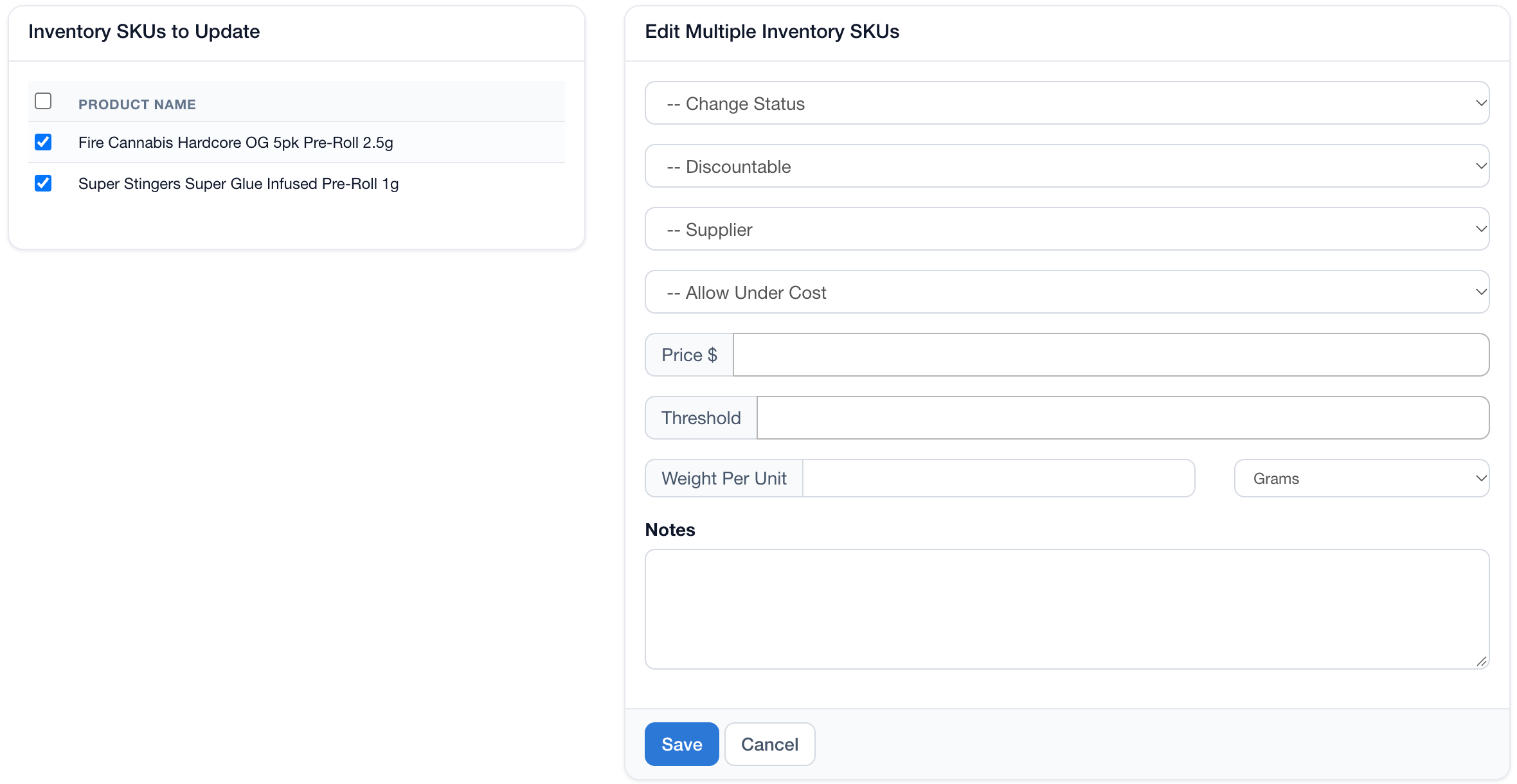
You can also bulk edit your inventory on the main Inventory page. You can do this by checking the box on the left side of each product, then clicking the Edit Checked button that appears in the bar above the table.

Edit Options:
- Status - Activate OR Archive bulk-checked products
- Discountable - Make all products discountable / not discountable
- Supplier - Select a supplier for all selected products
- Allow Under Cost - Select if you want to allow these products to sell under cost (with discounts)
- Price - Change the price of all selected products
- Threshold - This is for the reorder report to signal at the selected threshold.
- Weight Per Unit
- Weight metric
- Notes
For additional assistance, please reach out to POSaBIT support @ 1 (855) POSaBIT OR SUPPORT@POSaBIT.COM