How to Manage, Navigate, & Interpret POSaBIT POS Terminal Profiles within Settings

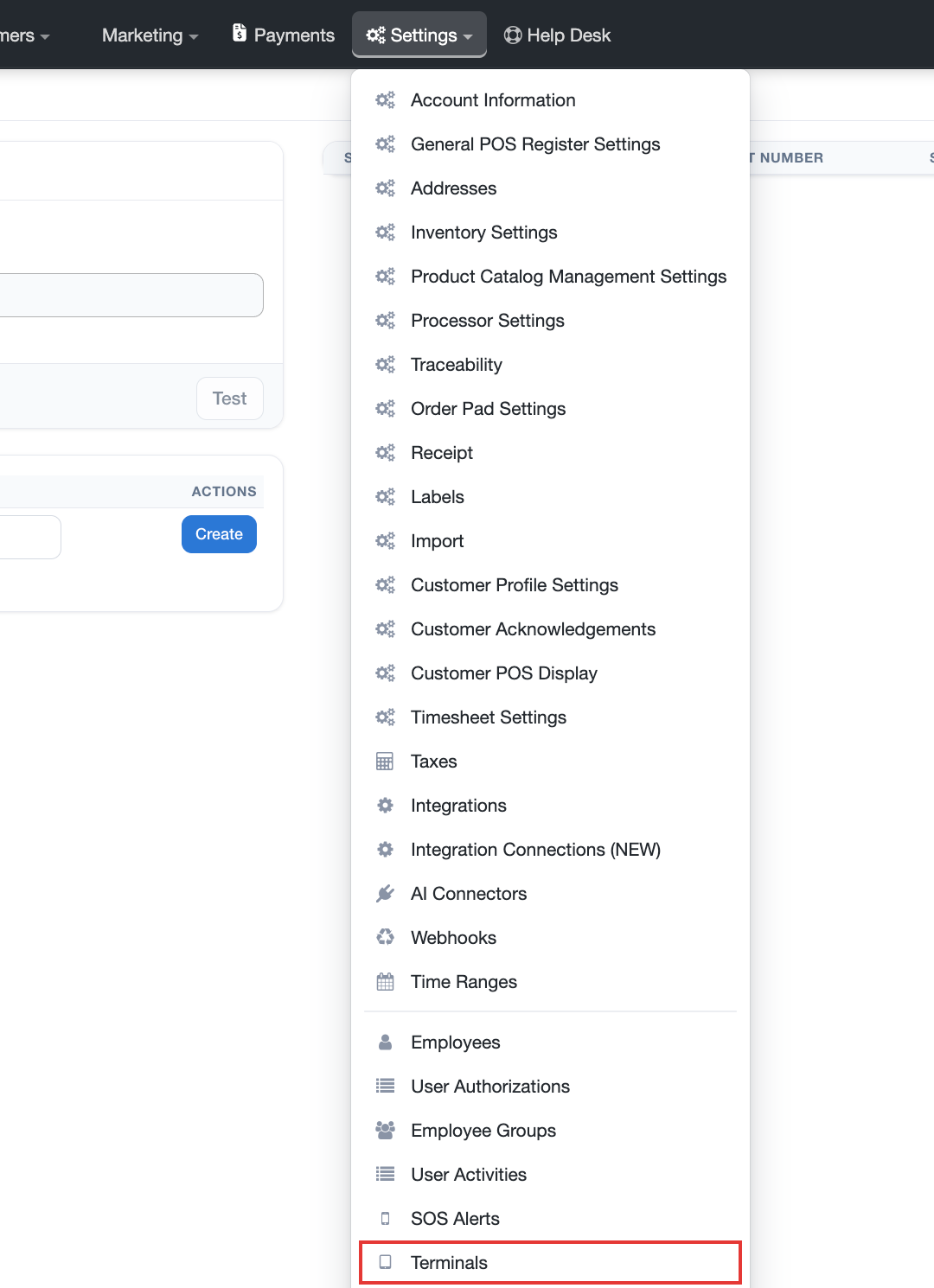
This article is to help our merchants better understand how the Terminals page can be used on the POSaBIT POS portal. Open it from Settings > Terminals.
Terminal Management and Info
Below is an image of the Terminals page. See below for a breakdown of the different columns. One thing to note is you have two viewing options: Active Only or All, where you will be able to filter the terminals by active only or see all active & inactive terminals at once. You can also Download the list, choose which Columns to show, and Search the table.
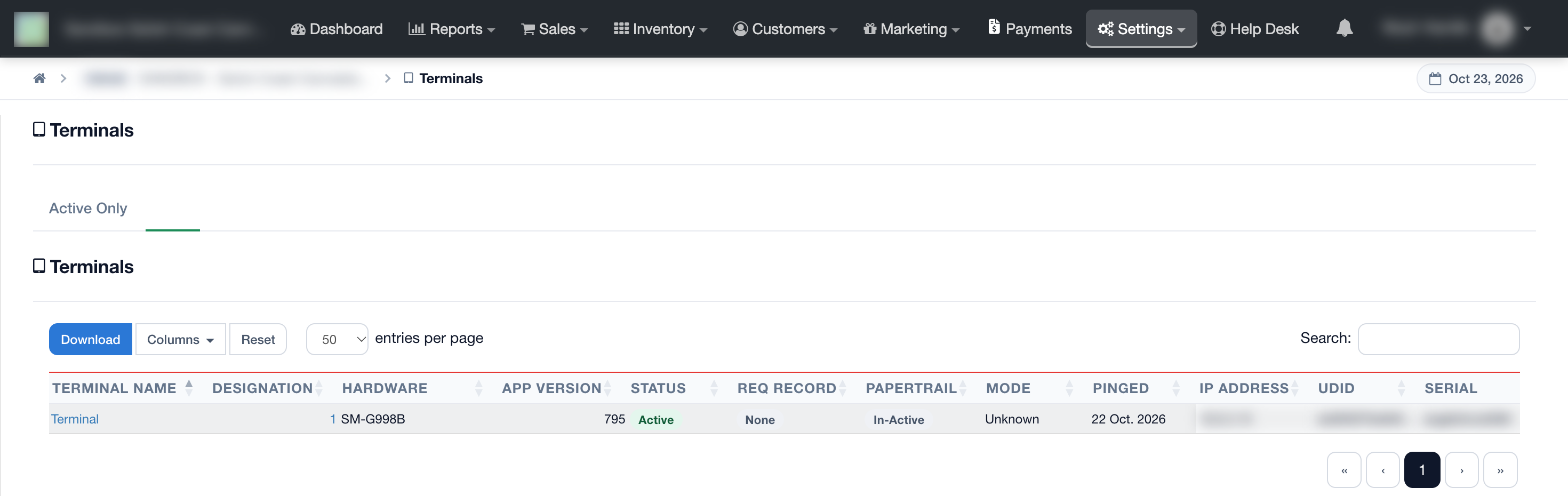
- Terminal Name: Name of the terminal
- You can edit this by selecting the terminal name, then Edit, and then type in the new name you'd like for the terminal. Save and the terminal name will be updated.
- Designation: This determines where this terminal displays on the list of terminals.
- You can edit this by selecting the terminal name, then Edit, and then type in the new designation you'd like for the terminal. Save and the designation will be updated.
- Hardware: This displays the hardware type of each terminal
- App Version: This displays the app version the terminal is running
- Status: Shows if the terminal is active or inactive
- Req. Record: This can be ignored by all users
- Papertrail: This can be ignored by all users
- Mode: This can be ignored by all users
- Pinged: This shows the last time our portal made contact with the terminal
- IP Address: This can be ignored by all users
- UDID: This can be ignored by all users
- Serial: This is the serial number of the terminal, it can be useful to include this whenever reporting an issue with a specific terminal.
- OS Version / OS Build / Last Updated: The terminal's operating system details and when the terminal record was last updated (scroll the table to the right to see these).
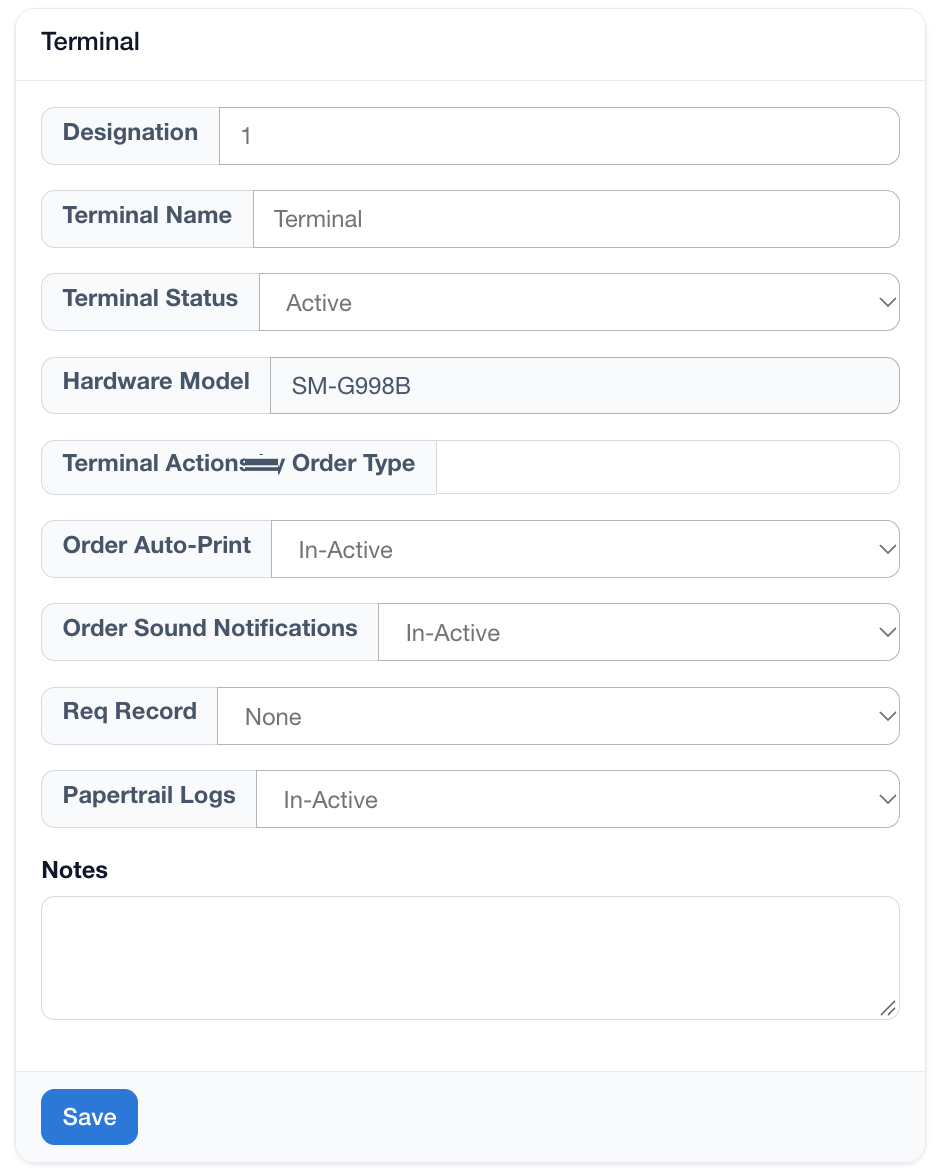
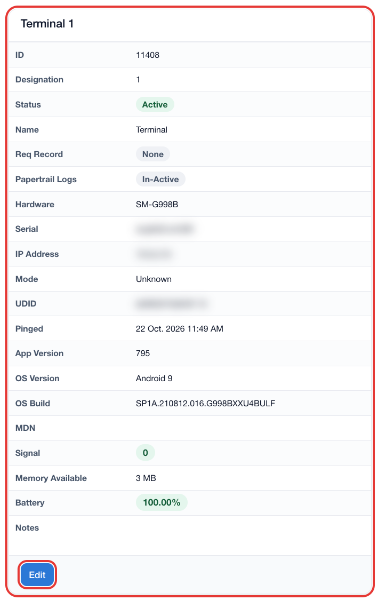
Some of the above info can be edited for each terminal by selecting the terminal you'd like to make edits to, then select Edit and you will be brought to a page that looks like the image below. After making any changes to the terminal, click Save.
Understanding the Information on Each Terminal
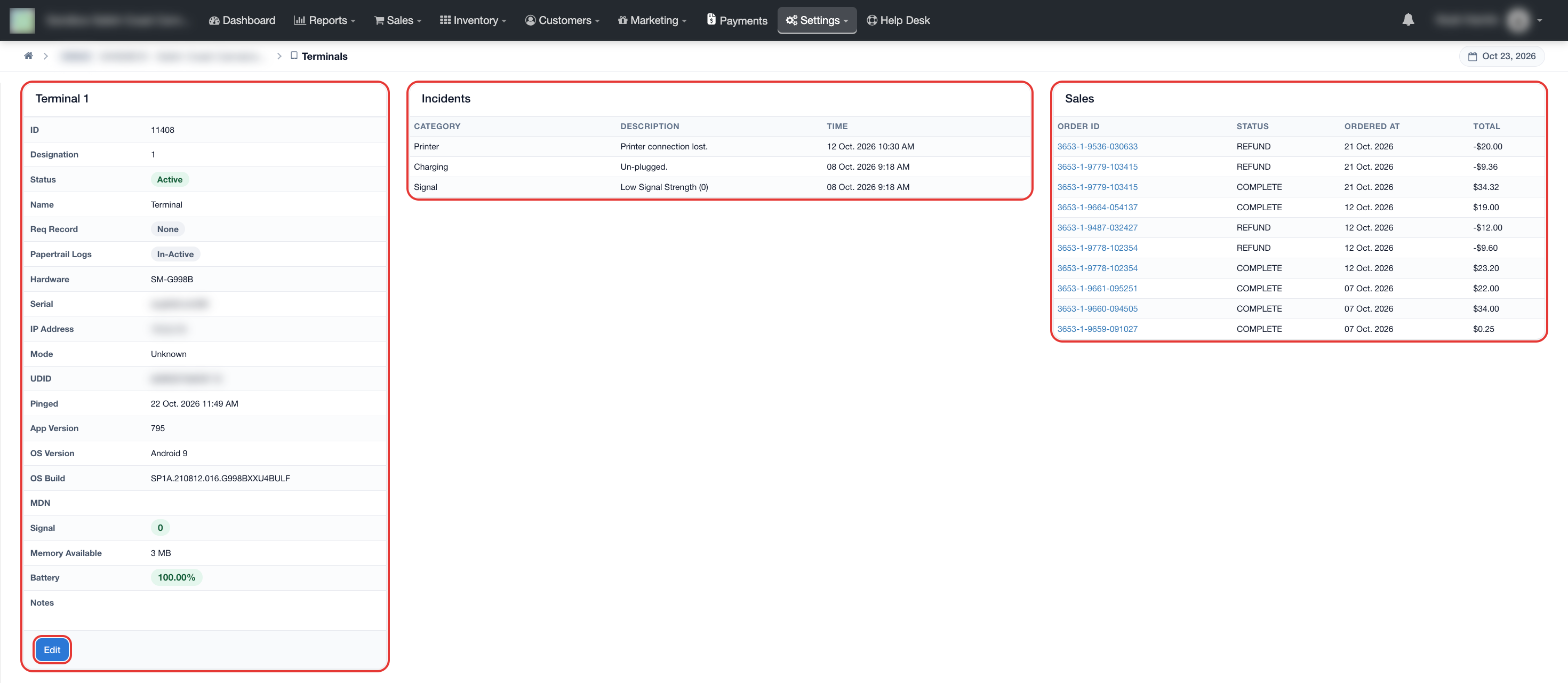
A majority of this information about the terminal can be ignored by all users, however, there is some valuable information on this page. See below for a breakdown:
Left side section: | This section of the terminals page can be helpful, though a lot of the information can be ignored. Here is a breakdown:
|
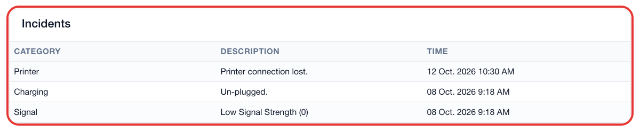
Middle section: | Incidents: This section of the terminals page can be ignored - it's used by the POSaBIT internal team for troubleshooting. |
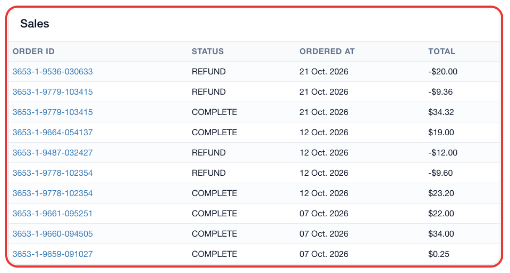
Right side section: | Sales: This section will display a preview of the recent sales on this terminal. |
For additional assistance please reach out to POSaBIT support @ 1 (855) POSaBIT OR SUPPORT@POSaBIT.COM